What Is a Nightly Build? The Channel That Never Arrives Anywhere
- By VersionDude





ParserFunctions is the extension that gives wikitext its logic: conditions, comparisons, arithmetic and dates. It ships with MediaWiki, but three of its behaviours surprise almost everyone: whitespace counts as empty, pipes break tables, and the string functions are switched off by default.
A fixed shape for commit messages that ties fix to PATCH and feat to MINOR, so the next version number follows from the log. The two breaking-change notations, and what the spec deliberately does not do.

Owning your content platform means control over data, customisation and cost - here is how the main self-hosted approaches compare.
ParserFunctions is the extension that gives wikitext its logic: conditions, comparisons, arithmetic and dates. It ships with MediaWiki, but three of its behaviours surprise almost everyone: whitespace counts as empty, pipes break tables, and the string functions are switched off by default.

A vulnerable package three levels down, and a parent that has not released a fix. The overrides field in your root package.json lets you choose the version yourself, for the whole tree or for one parent only. It also has three rules that explain most of the cases where it appears to do nothing.

They look interchangeable and they are not. npm install may change package-lock.json to satisfy your ranges; npm ci refuses to, and deletes node_modules first. That single difference decides which one belongs in CI and which one belongs on your machine.

The shadow DOM is sold as encapsulation, which suggests a wall. It is more precise than that: some things stop at the boundary, others cross it freely, and knowing which is the whole difference between a component that behaves and one that fights your design system.

Both watch your dependencies and open a PR. That part is identical, so it cannot be what you choose on. What separates them is grouping, scheduling and where they run - and one of them is already switched on in your repository.

One states what you accept, as ranges. The other records what was actually resolved, down to the packages you never named. Treating them as two views of the same thing is why “it works on my machine” is still alive in 2026.

Semantic versioning explains what a version number means. The range syntax decides which versions you accept without asking. The two are not the same, and the caret changes its own rules below 1.0.0.
Alpha, beta and release candidate are stages on the way to a release. A nightly is not a stage at all: it is a snapshot of the main branch, produced on a schedule, with no promise that any particular one becomes anything.
An RC is not a beta with a nicer name. It is the build the team intends to release as-is unless someone finds a blocker. What the ladder from alpha to rc actually promises, how SemVer orders prereleases, and why your package manager refuses to install one by accident.
LTS means Long Term Support: a release line that keeps getting security fixes for a period announced in advance. How Node.js, Ubuntu and Java define it, what you give up by choosing it, and why the support window matters more than the version number.

The two foundations announced a memorandum of understanding on 30 July. The agreement itself changes nothing this week; the EU Cyber Resilience Act deadline behind it does. What takes effect, why the CRA names open source stewards, and why an SBOM is a versioning problem.
Fat Free CRM is the one project that really fits the description. Most of what gets listed next to it is written in PHP or Python.
peerDependencies express compatibility with a host package rather than requiring it. npm v7 started installing them by default, which is why ERESOLVE errors feel new. What they are, why broad ranges beat pinned ones, and when to mark a peer optional.
A fixed shape for commit messages that ties fix to PATCH and feat to MINOR, so the next version number follows from the log. The two breaking-change notations, and what the spec deliberately does not do.

The reference HTML checker warns that zero errors today does not guarantee zero errors tomorrow, and that it is not a pass/fail certification. Here is how to wire it in anyway.
We pulled the last 100 GitHub releases of ten front-end projects and split stable versions from prereleases. Next.js turned out to be 88 percent prereleases, Svelte and React Router zero, and stable cadence spans roughly eighty times. Data, method and limits.

A package manager is a tool that installs, updates and removes software and its dependencies from a repository, so you do not have to track down and wire up every piece by hand. What they are, the main types, how version resolution and lockfiles work, and the practices that keep installs safe and reproducible.

Microsoft is making passkeys the default sign-in method in Entra ID from 1 September 2026 and retiring its SMS and voice authentication on 1 February 2027. What passkeys are, why Microsoft says text and call codes no longer stop modern attacks, and what Entra admins should do now.

CI/CD is a way of building software where changes are merged, tested and shipped through an automated pipeline. What continuous integration and continuous delivery mean, how the pipeline works, the common tools, and the honest trade-offs.
An environment variable is a key=value pair the operating system hands to a running process, kept outside the source code. What they are, why they matter for config and secrets, how to set and read them, and the good practices that keep secrets out of your repo.

A changelog is a human-readable file listing the notable changes in each version of a project. The Keep a Changelog convention, the standard change groups, and how it ties into Semantic Versioning.
A git tag is a named reference that points to a specific commit, used above all to mark releases and versions. Lightweight versus annotated tags, how they differ from branches, and how to create and push them.

A lockfile records the exact resolved version of every dependency so everyone installs the same thing. Why manifests alone are not enough, how integrity hashes add security, and whether to commit it.

Semantic Versioning numbers releases as MAJOR.MINOR.PATCH so the version itself tells you what changed. What each part means, the reset rules, pre-release labels, and how npm ranges like ^1.2.3 rely on it.
TypeScript 7.0 shipped on 8 July 2026 with a compiler rewritten in Go, and Microsoft's benchmarks put builds around 10x faster. What actually changed, why it is faster, and what to check before you migrate.

In July 2026 Wiz disclosed GhostApproval, a flaw in six AI coding assistants. A malicious repository uses a symbolic link to redirect an approved file edit onto sensitive files like your SSH keys. What the attack is, which tools are affected, and how to stay safe.
In June 2026 Novo Nordisk confirmed a major breach. The attackers reportedly got in through secrets left in client-side JavaScript - Azure credentials and a GitHub token. The developer lesson: a secret in front-end code is a public secret.

Opera has launched Paste Protect, billed as the first native defense in a major browser against clipboard-based attacks like ClickFix and pastejacking. What the attacks are, what Paste Protect does, and how to protect yourself in any browser.
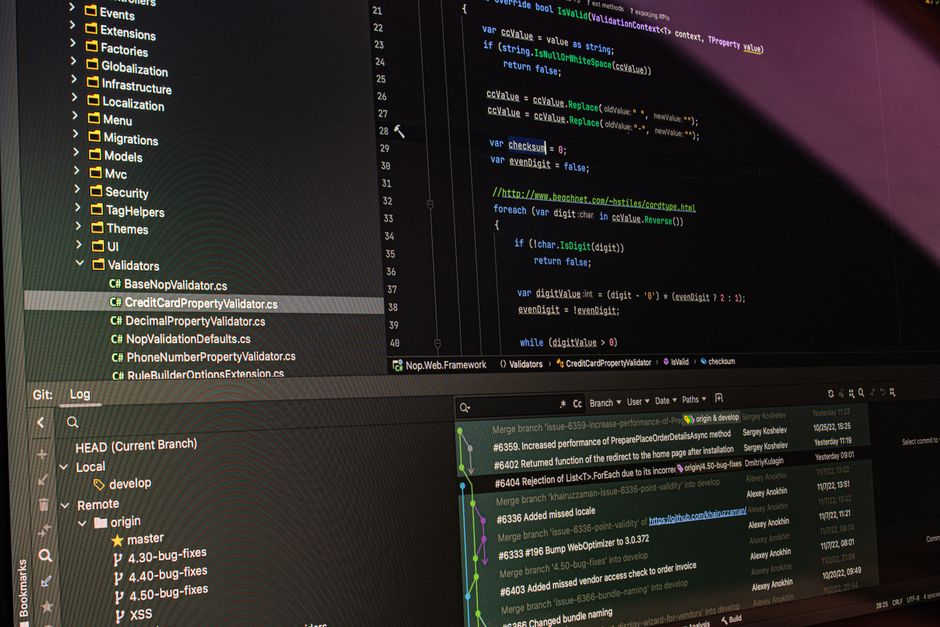
Git is a distributed version control system that tracks every change to your code and lets many people work on it together without overwriting each other. What Git is, the core concepts, how it differs from GitHub, and the basic commands.

A reverse proxy sits in front of your servers and handles every incoming request first - routing, HTTPS, caching and protection in one place. What it does, how it differs from a forward proxy, and the tools that run one.

An API (Application Programming Interface) is a contract that lets one piece of software ask another for data or actions, without knowing how it works inside. What an API is, how a request and response work, the common styles like REST and GraphQL, and why developers build on them.

A Docker container packages an app with everything it needs to run, so it behaves the same on any machine. What a container is, how it differs from a virtual machine, image vs container, and where containers fit in real projects.

DevOps combines software development and IT operations into one automated, collaborative workflow so teams ship faster and more reliably. What DevOps is, the core practices (CI/CD, infrastructure as code), the culture behind it, and the common tools.

A webhook is an automated HTTP request one service sends to another the moment an event happens - a push instead of a poll. What a webhook is, how it differs from a normal API, how it works, and how to receive one securely.

A CDN (Content Delivery Network) is a worldwide network of servers that caches copies of your site close to users, so pages load faster and your origin server is shielded. What a CDN is, how it works, and when you need one.

A VPS (Virtual Private Server) gives you a private slice of a real server - your own OS, root access and guaranteed resources. What that means, how it differs from shared and cloud hosting, and when you need one.

Why open-source matters for a password manager, and the projects worth trusting - from Bitwarden and KeePassXC to Proton Pass.

Running your own password manager puts you in charge of where secrets live - here is how the main options compare, and when a managed service makes more sense.

API keys, tokens and .env files should never sit in plain text or in your git history. Here is how teams keep application secrets safe.
SSH keys replace passwords with something far stronger - but only if you protect, separate and rotate them. A plain-English guide to managing SSH keys safely.

What Proton Mail actually offers - end-to-end encryption, open-source apps and a Swiss privacy base - and where its trade-offs lie.

What "encrypted email" really means, the difference between zero-access and end-to-end, and the services that do it credibly.

Proton’s password manager brings end-to-end encryption, open-source apps and integrated email aliases - here is how it holds up.
The Document Object Model is the tree a browser builds from your HTML - and the thing your JavaScript actually talks to.
An HTML validator checks your markup against the living standard - catching errors that browsers hide but that hurt accessibility and reliability.

A parser turns a stream of characters into structured data a program can work with - the step between raw text and meaning.

The idea of a web of data - where meaning is machine-readable - and the standards like RDF, OWL and reasoners that make it work.
They look alike, but XML and HTML were built for different jobs - one describes documents for browsers, the other carries structured data.

Rails is better known for apps than for CMSes, but a lineage of Rails-based content systems - from Railfrog onward - has always existed.

Mojibake, broken accents and "" symbols all come down to encoding. Here is what UTF-8 is and why it is the default of the modern web.
Owning your content platform means control over data, customisation and cost - here is how the main self-hosted approaches compare.